

Do you often feel a burning sensation in your chest after meals, or does your stomach feel uncomfortably full even after eating a small portion? Acidity, bloating, and indigestion are common complaints, but when they keep returning, it is worth understanding what your body may be telling you.
These symptoms can result from eating habits, certain foods, or digestive conditions that need medical attention. Knowing the difference between occasional discomfort and persistent symptoms can help you decide when to seek medical advice.
What Could Your Digestive Symptoms Mean?
Acidity, bloating, and indigestion may occur together, but they do not always have the same cause. Paying attention to when they appear and how long they last can help identify possible triggers.
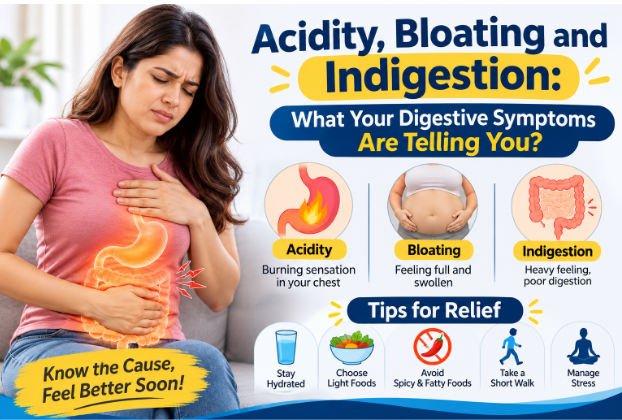
- Acidity: A burning sensation in the chest or throat, often after meals, may be caused by acid reflux. It can become more noticeable after spicy or fatty foods or when lying down soon after eating.
- Bloating: A feeling of fullness or tightness in the abdomen may develop due to gas, constipation, food intolerance, or certain digestive disorders.
- Indigestion: Upper abdominal discomfort, nausea, belching, or feeling full quickly during a meal may indicate indigestion, also known as dyspepsia.
Occasional symptoms may improve with changes in eating habits. However, frequent episodes deserve medical evaluation, especially when they interfere with sleep, appetite, or daily activities.
Common Triggers Behind Digestive Discomfort
Your daily routine can influence how your digestive system functions. Eating too quickly, having large meals, or lying down immediately after dinner may worsen symptoms in some people.
Other possible triggers include:
- Spicy, oily, or high-fat foods
- Excessive tea, coffee, or carbonated drinks
- Smoking and alcohol consumption
- Irregular meal timings
- Stress and inadequate sleep
- Constipation or sensitivity to certain foods
- Some medicines, including anti-inflammatory painkillers
Keeping track of meals and symptoms can help you identify patterns. Avoiding specific triggers may provide relief, but persistent symptoms should not be managed through dietary changes alone.
When Should You Consult a Doctor?
Many people take antacids whenever acidity occurs. While these medicines may provide temporary relief, repeatedly relying on them without understanding the cause can delay appropriate treatment.
Consult a doctor if you experience frequent heartburn, recurring abdominal discomfort, persistent bloating, or indigestion that does not improve with basic lifestyle changes.
Seek urgent medical attention if digestive discomfort is accompanied by chest pain, difficulty breathing, vomiting blood, black stools, severe abdominal pain, or persistent vomiting. Unexplained weight loss, difficulty swallowing, and loss of appetite also require prompt evaluation.
If you live near Hanumanthawaka and experience recurring digestive problems, consulting a doctor at the best Hospital in Hanumanthawaka can help you understand the possible causes and identify the next steps for evaluation.
How Are Persistent Digestive Symptoms Diagnosed?
Diagnosis begins with understanding your symptoms, medical history, eating habits, and medication use. A doctor may also examine your abdomen to identify areas of tenderness or discomfort.
Depending on the findings, investigations may include:
- Blood tests: To check for anaemia, inflammation, or other underlying concerns.
- H. pylori testing: To identify an infection associated with certain stomach ulcers and cases of indigestion.
- Ultrasound: To investigate possible gallbladder or abdominal conditions.
- Upper gastrointestinal endoscopy: To examine the oesophagus, stomach, and upper part of the small intestine when indicated.
Not everyone needs all these tests. The choice depends on the symptoms, their duration, the patient’s age, and any warning signs.
People experiencing persistent symptoms around Siripuram can seek medical evaluation at the best Hospital in Siripuram to understand whether further testing or specialist consultation is necessary.
Simple Changes That May Help Reduce Discomfort
For occasional acidity, bloating, and indigestion, a few changes may help reduce symptoms:
- Eat smaller meals instead of very large portions.
- Chew food slowly and avoid eating in a rush.
- Stay upright for at least two to three hours after meals if you experience acid reflux.
- Drink enough water throughout the day.
- Increase fibre gradually if constipation contributes to bloating.
- Identify and limit foods that consistently trigger symptoms.
- Maintain regular physical activity.
These measures can help with common digestive complaints, but they are not a substitute for medical assessment when symptoms persist or worsen.
Residents near PM Palem dealing with recurring acidity or indigestion can consult a doctor at the best Hospital in PM Palem for an appropriate assessment and treatment plan.
Take Digestive Symptoms Seriously
Acidity, bloating, and indigestion do not always indicate a serious illness, but recurring discomfort should not become a normal part of everyday life. Recognising symptom patterns, making suitable lifestyle changes, and seeking medical advice when needed can help identify the cause and guide appropriate treatment.
With timely evaluation and the right care, many digestive conditions can be managed effectively. Taking action early can help you return to meals and daily activities with greater comfort and peace of mind.