

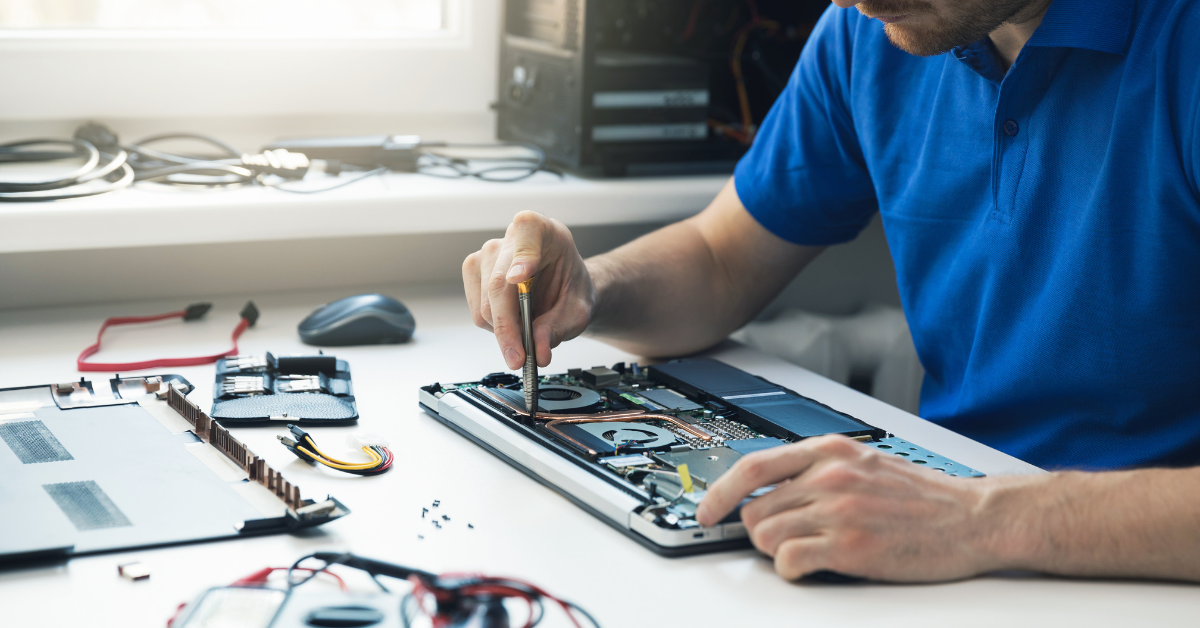
A laptop display can develop flickering, tiny black or coloured dots, intermittent lines, or sudden brightness changes without warning. For someone working from home in Wellington, studying in Christchurch, or running a business from the Wairarapa, even a minor display fault can make everyday work frustrating and unreliable.
Searching for laptop screen repair NZ is often the first step, but the visible symptom does not always identify the failed component. Understanding what causes these problems can help you avoid paying for an unnecessary replacement, recognise signs of physical failure, and decide when professional diagnosis is worthwhile.
The distinction becomes particularly important when flickering and dead pixels appear together.
The two symptoms can have very different causes
When a display starts behaving strangely, it is tempting to assume the entire panel has failed. In practice, laptop screen flickering and dead pixels can result from separate problems occurring at the same time or from one underlying hardware fault affecting the display signal.
A useful first distinction is whether the problem follows the screen itself or the computer’s graphics output.
- Flickering that changes when the lid moves often points towards a loose connection or damaged internal wiring.
- A fixed black, white, red, green, or blue dot is more consistent with a failed pixel.
- Flickering across the entire display may involve software, graphics hardware, power delivery, or the panel.
- Lines, dark areas, or spreading marks after an impact strongly suggest panel damage.
This distinction matters because a display panel replacement may solve a damaged screen, but it will not necessarily solve a software- or graphics-related fault.
What can cause flickering and dead pixels?
The most reliable diagnosis starts by considering the components that sit between the laptop’s operating system and the image you see.
Display connections can deteriorate
Inside a laptop, the screen is connected to the motherboard through a thin display cable that passes through or near the hinge area. Repeated opening and closing can eventually stress the cable or its connection.
If the display flickers when you adjust the lid, opens normally at one angle but not another, or briefly cuts out when the hinge moves, the cable or connector deserves attention.
A loose screen connector can produce similar symptoms. In these situations, replacing the entire panel without checking the connection first can be an unnecessary expense.
The LCD panel itself may be failing
A damaged LCD panel can develop stuck or dead pixels, horizontal or vertical lines, uneven brightness, or sections that no longer display correctly.
Dead pixels are individual pixels that remain permanently off or stuck displaying a particular colour. One isolated pixel may be annoying but usable. A cluster of failed pixels, expanding lines, or a visibly damaged panel is much more likely to justify replacement.
Unlike a loose connection, individual failed pixels generally cannot be repaired economically at component level. The practical solution is usually panel replacement, provided a compatible replacement is available.
Graphics software can create misleading symptoms
Not every case of laptop screen flickering or dead pixels originates inside the display assembly. An outdated or corrupted GPU driver can cause flickering, incorrect resolution, flashing, or instability after Windows updates.
This is why software should be ruled out before buying hardware. Testing an external monitor can be especially useful: if the external display works perfectly while the laptop panel flickers, the fault is more likely to be within the laptop’s display assembly or its connection.
Brightness and refresh settings can matter
Incorrect refresh rate settings can sometimes create visible flicker, particularly when a laptop has recently been updated or connected to another display.
Similarly, a failing backlight can cause a screen to appear dim, pulse, or change brightness unevenly. A backlight problem can look like general display failure even when the LCD image itself is still being generated correctly.
How to tell whether the problem is hardware or software
Before paying for a replacement, a few controlled checks can narrow down the cause.
First, restart the laptop and observe the display during startup. If the flickering appears before Windows or another operating system loads, software becomes less likely to be responsible.
Next, connect an external monitor or television. If the external display remains stable while the laptop screen continues flickering, attention should shift towards the laptop’s panel, cable, or connector.
It is also worth gently changing the screen angle. Do not press the panel or deliberately flex the lid. Simply observe whether normal hinge movement changes the symptom.
Finally, check whether the issue started after a drop, pressure in a laptop bag, liquid exposure, overheating event, operating-system update, or graphics-driver update. These details can significantly shorten the diagnostic process.
When dead pixels mean replacement is more sensible
The economics change when laptop screen flickering dead pixels are accompanied by visible panel damage.
A laptop screen replacement is generally more appropriate when there is:
- A cracked or visibly damaged panel
- A large cluster of dead or stuck pixels
- Permanent vertical or horizontal lines
- A black area that is spreading
- Persistent flickering after connections and software have been checked
- Damage caused by pressure, impact, or a hinge-related incident
By contrast, a loose cable, connector issue, or software fault may be resolved without replacing the display.
The laptop’s age also matters. A high-quality business laptop that still performs well may justify a replacement panel, while an older machine with several other faults may make replacement less attractive financially.
Why professional diagnosis can save money
One of the biggest mistakes with laptop screen flickering dead pixels is treating the visible symptom as the diagnosis.
For example, imagine a laptop that flickers whenever its lid is moved. A user may search for a replacement panel, order one online, and pay for installation, only to discover that the original panel was functional and the underlying issue was a damaged cable.
A technician can assess the display behaviour, inspect connections, test the graphics output, compare internal and external displays, and determine whether the panel itself is defective. This diagnostic approach is particularly useful when replacement parts are expensive or difficult to source for an older laptop.
For users in the Wellington region, Hutt Valley and Wairarapa, Tech On Road provides on-site computer and laptop repair in NZ alongside broader IT support, allowing technicians to assess technology problems at homes and workplaces across areas including Wellington, Lower Hutt, Upper Hutt, Masterton and South Wairarapa.
A practical way to decide what to do next
If laptop screen flickering dead pixels appear suddenly, do not immediately assume the display needs replacing.
Start by recording what the fault looks like and when it happens. Does it occur during startup? Does moving the lid affect it? Does an external monitor work normally? Are the pixels fixed in one location? Did the problem follow an impact or software update?
Those observations help separate laptop display problems caused by the panel from issues elsewhere in the system.
For a business user, the decision should also consider downtime. A screen that works intermittently may be more disruptive than a straightforward replacement, particularly when the laptop is used for customer service, accounting, remote meetings, or field work.
The same principle applies to students and home users: compare the cost of diagnosis and repair with the laptop’s age, specifications, condition, and expected remaining service life.
Make the diagnosis before making the purchase
The key lesson is that laptop screen flickering dead pixels is a symptom, not a single diagnosis. Flickering may originate from connections, drivers, graphics hardware, panel electronics, refresh settings, or backlighting, while genuinely failed pixels are usually a panel-level problem.
If the screen has suffered physical damage, replacement is often the clearest solution. If the display changes with lid movement or an external monitor works normally, further diagnosis may reveal a smaller and less expensive fault.
Before ordering a new panel, ask a simple question: Do I know which component has actually failed? Getting that answer first can prevent unnecessary spending and help you choose between repair, screen repair, or a complete laptop screen replacement with much greater confidence.
For New Zealand laptop owners, especially those relying on their device for work or study, the sensible approach is to diagnose the cause first and then compare the repair cost against the laptop’s condition and remaining value.